Have you ever been handed a prescription for Lisinopril the moment your blood pressure numbers climbed?
Maybe you were told to “watch your salt” or “reduce stress,” but no one mentioned changing what you eat?
That’s exactly what happened to me.
I’ve been a self-proclaimed “vitamin nut” for years. I take my supplements seriously and try to live a healthy lifestyle. But I also had a long-standing habit of eating my stress. Tired? Grab a Coke. Stressed? Reach for a doughnut. I’d break the cycle for a few months, only to fall right back into old patterns.
This year, it finally caught up with me.
The Wake-Up Call
I started coming home from work completely exhausted, desperate for even five minutes with my eyes closed. I developed brutal headaches that wrapped across the top of my head and shot down into my teeth. When I finally checked my blood pressure, it was 160/100.
At first, I blamed it on work stress. I manage the Special Services department for our local school system — a demanding job on the best of days. My blood pressure would drop in the evenings and on weekends, so I convinced myself that was the cause.
But it kept climbing. The day it hit 170/100, the headaches were so bad I had to leave work early. That’s when I finally admitted what I already knew deep down: I was dealing with insulin resistance.
The Turning Point
I knew giving up carbs would be hard. Who wants to say goodbye to bread, pasta, and sweets? But I was sick and scared enough to try.
Two days after cutting out flour and sugar, my blood pressure dropped significantly to 135/95.
Two weeks later, it was completely normal at 128/80.
Even on stressful workdays, it now peaks around 128/88 and quickly returns to normal. The difference has been undeniable.
Why Cutting Carbs Worked So Fast
Here’s the simplified explanation:
When your body becomes resistant to insulin (from years of high-carb eating), your pancreas keeps pumping out more insulin. That excess insulin tells your kidneys to hold onto sodium and water. It also causes your blood vessels to constrict. The result? Higher blood pressure.
By dramatically reducing carbohydrates, your body produces less insulin, your receptors become sensitive again, and the whole cascade that raises blood pressure starts to reverse.
It wasn’t magic; it was basic physiology.

Why This Frustrates Me
What frustrates me most is how rarely doctors suggest trying dietary changes first. Many older adults I know have been on blood pressure medications for decades because they were prescribed them in their 40s or 50s, with little conversation about root causes or natural solutions.
Yes, there are times when medication is necessary and life-saving. But our bodies were not created with a Lisinopril deficiency. God designed them to function on the food He provided, not on a lifelong pharmaceutical protocol that often leads to additional problems (like water retention treated with diuretics that then deplete important nutrients).
My Faith-Based Take
We were fearfully and wonderfully made (Psalm 139:14). Our bodies have incredible healing capacity when given the right conditions. In a fallen world with depleted soils, processed foods, and chronic stress, we often need to be intentional about combining wise dietary choices with targeted supplementation.
What I’m Doing Now
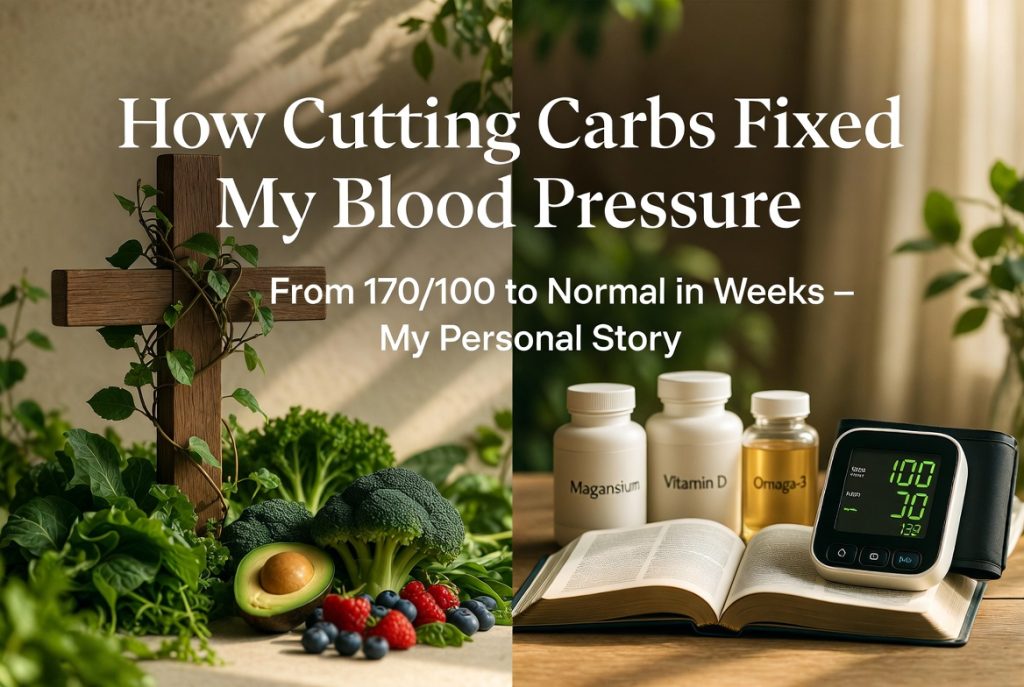
- Diet: Very low in refined carbs and sugar. Focus on vegetables, quality proteins, healthy fats, and some fruit.
- Supplements: I continue my regular stack, with extra attention to nutrients that support healthy blood pressure (magnesium glycinate, potassium-rich foods/supplements, omega-3s).
- Lifestyle: Better stress management, more rest, and prayer.
The combination has made a dramatic difference.
A Word of Caution
This is my story. Results vary. Always work with your doctor, especially if you’re on medication. Never stop prescriptions without medical supervision. What worked for me may be part of a broader solution for you.
If you’re struggling with high blood pressure, insulin resistance, or metabolic issues, consider asking your doctor about a short-term low-carb trial. Many people see significant improvements within days or weeks.
What about you?
Have you seen improvements in blood pressure or energy by changing your diet? Are you currently on blood pressure medication and wondering if there’s a better way? Share your experience in the comments.
If this post encouraged you, please share it. I’m building this space to explore faith, real food, and smart supplementation, because true wellness in a broken world takes both wisdom and diligence.